
Devices for Clinical Research
RGn600: an innovative non-invasive medical device using photobiomodulation neurostimulation.
REGEnLIFE is able to make its devices available for clinical research, in particular the RGn600, the first medical device targeting the brain and intestine to treat neuroinflammation and improve cognition.
Are you a researcher, clinician or scientific project leader wishing to set up clinical study protocols to evaluate the efficacy of RGn600 in various pathological contexts, including neurodegenerative, neurological or psychiatric disorders?

Neurostimulation is one of the most dynamic areas in clinical neurosciences.
REGEnLIFE aims to contribute to advances in neurological research by making its innovative technology available for clinical investigation: RGn600, the 1st neurostimulation medical device targeting the brain and intestine to treat neuroinflammation.
RGn600 is a non-invasive medical device based on photobiomodulation (PBM). PBM uses red or near-infrared light to treat neuroinflammation by stimulating brain and gut cells.
PBM Mechanism of Action:
REGEnLIFE’s PBM-based medical device has already shown efficacy results in preclinical and clinical studies for several pathologies, including Alzheimer’s disease, concussion, depression, and multiple sclerosis (see scientific references).
Other preclinical and clinical studies are currently underway.
RGn600 is a safe, simple, and effective solution.
RGn600: a medical device usable in healthcare facilities and outpatient care
RGn600 is a non-invasive photomedical neurostimulation technology designed for easy use by study investigators in healthcare facilities or outpatient care.
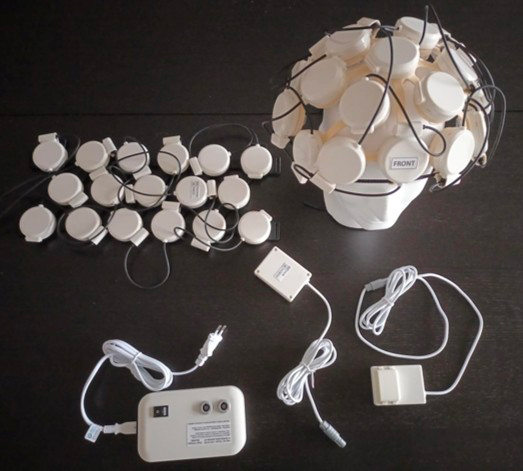
The tri-photonic technique uses PBM combined with a static magnetic field (SMF), precisely delivered by an ergonomically designed helmet and abdominal belt, to targeted areas of the brain and abdomen.
The mobile control unit features a user-friendly interface for configuring stimulation parameters (intensity, frequency, duration), while remaining easily transportable.
Portability is indeed a determining factor in the development of RGn600. Its architecture combines therapeutic efficacy, ergonomics, and reduced weight and bulk, particularly for hospital use, but also for home applications, mobile use, or in non-laboratory research environments.
RGn600 Treatment Characteristics:
Customization
REGEnLIFE Clinical Devices: A Flexible, Customizable, and Evolving Modular Design to Adapt to Research Needs
REGEnLIFE medical devices for clinical research are modular to combine flexibility of use, therapeutic customization, and treatment precision. Indeed, the helmet and abdominal belt (RGn600) are composed of several independent, interconnectable modules that can be added or removed. These modular devices allow for individualized neurostimulation treatment by adjusting the number and position of modules based on individuals and targeted therapeutic goals.
Furthermore, the software configuration of the clinical devices allows for controlling and adapting PBM neurostimulation protocols to the specific needs of research work. The pre-established programs are thus customizable by the investigator. Modifiable parameters include:
- Laser type
- Types of optical components
- Wavelengths
- Irradiance
- Continuous or pulsed mode and the rhythm of PBM emissions
- Treatment duration
The modularity of REGEnLIFE devices and parameter optimization thus allow for adjusting protocols according to research needs and observed neurophysiological results.